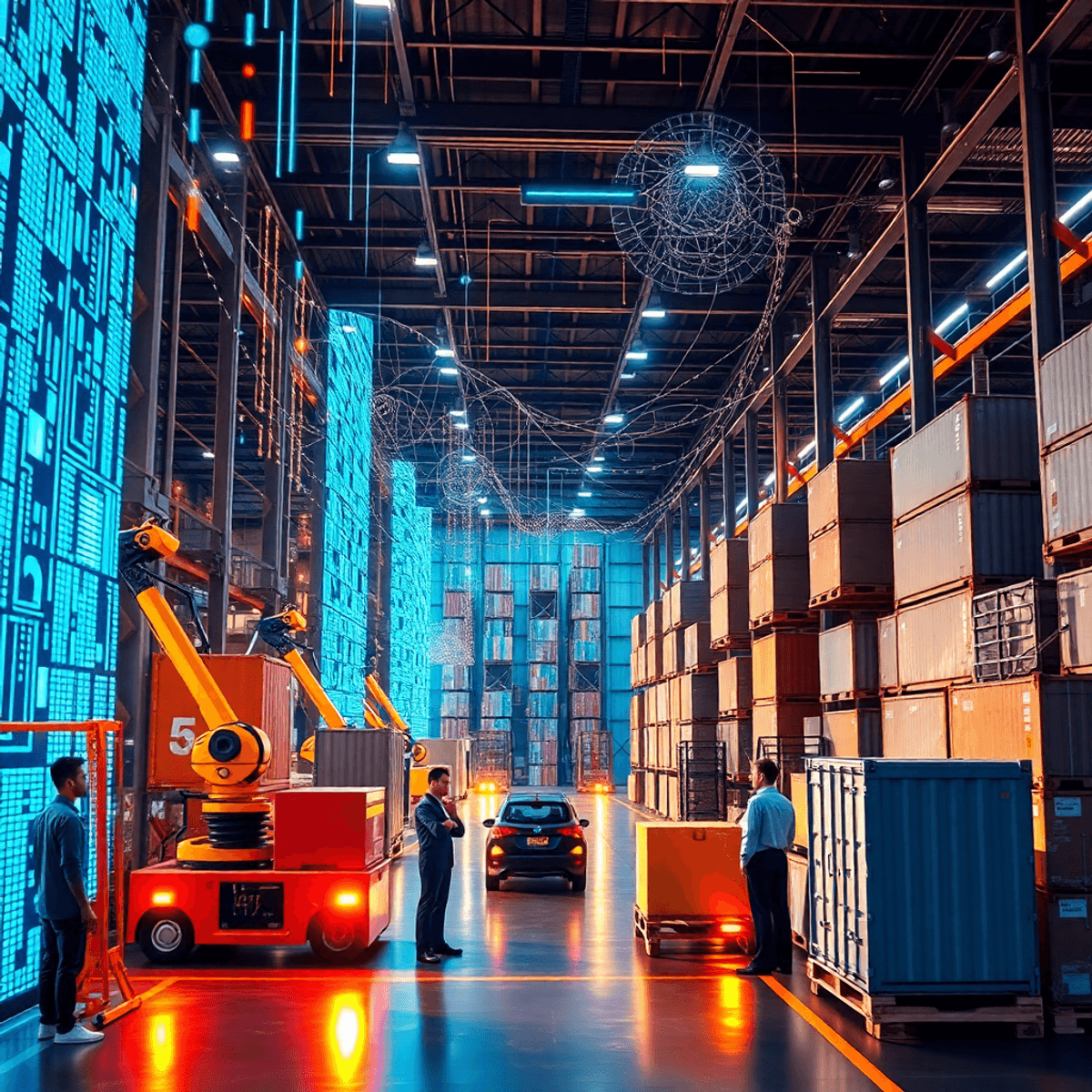
AI Intent Insights for Logistics and Supply Chain Providers represent a fundamental shift in how companies navigate the complexities of modern supply chain management. These insights use artificial intelligence in logistics to analyze large amounts of data, predict market trends, and improve decision-making processes at every stage of your supply chain operations.
AI intent insights are more than just automation. They're a technology that turns raw data into useful information, allowing logistics providers to:
This ability is crucial as supply chains become more complex and interconnected globally.
Artificial intelligence technologies are completely changing how supply chains operate. Here's how:
Data-driven decision-making has gone from being a competitive advantage to something businesses must have. Supply chain providers are under increasing pressure to:
AI intent insights are the basis for meeting these demands. They turn scattered information into clear strategies that lead to measurable improvements in productivity, cost reduction, and customer satisfaction.
AI democratization is reshaping how logistics leaders approach operational challenges. You no longer need specialized data science teams to harness the power of artificial intelligence. Modern AI platforms bring sophisticated analytics capabilities directly to supply chain professionals, enabling them to extract actionable insights without technical barriers.
Supply chain data analytics powered by AI transforms mountains of fragmented information into strategic intelligence. Your logistics operations generate massive volumes of data—shipment tracking, inventory levels, carrier performance, weather patterns, and market fluctuations. AI systems process this complexity in real time, identifying patterns and anomalies that human analysts would miss or take weeks to uncover.
The impact on decision-making optimization is substantial. When you integrate AI intent insights into your logistics workflows, you gain:
AI applications accelerate your response times from days to minutes. You can evaluate multiple scenarios simultaneously, comparing the potential outcomes of different strategic choices. This speed advantage translates directly into competitive positioning, allowing you to capture opportunities and mitigate risks while competitors are still gathering information.
Generative AI is changing the way logistics teams work with their operational data. Tools like Uber Freight's Insights AI show how powerful this technology can be by turning raw transportation data into useful information. Now, instead of needing a data science degree to understand the data, you can simply ask questions in everyday language and get immediate answers about shipment trends, carrier performance, or cost issues.
The idea behind intelligent co-pilots perfectly describes what generative AI does in today's logistics operations. These systems don't take over your knowledge; they enhance it. When you're looking at freight routes or considering different carriers, generative AI quickly brings up relevant past data, current market conditions, and future predictions. This means your team spends less time searching for information and more time making important decisions.
Here are some ways in which generative AI is benefiting the logistics industry:
By leveraging these capabilities, logistics teams can operate more efficiently and effectively, ultimately leading to better customer service and cost savings.
Traditional supply chains operate in fragmented ecosystems where data lives in isolated systems, creating blind spots that compromise decision-making. AI Intent Insights for Logistics and Supply Chain Providers break down these barriers by connecting disparate data sources into unified intelligence platforms. You gain real-time transparency across your entire network, transforming how you monitor operations and respond to disruptions.
The power of AI-driven supply chain visibility extends far beyond tracking immediate suppliers. While most companies maintain reasonable oversight of Tier 1 suppliers, deeper supply chain layers remain opaque. AI technologies now penetrate these hidden tiers, mapping relationships and dependencies that were previously invisible. You can identify vulnerabilities in Tier 3, Tier 4, and even Tier 5 suppliers before they cascade into operational crises.
Enterprise system integration becomes seamless when AI orchestrates data flows between ERPs, WMS platforms, and transportation management systems. This unified view supports multiple strategic objectives simultaneously:
AI algorithms continuously analyze patterns across your extended network, flagging anomalies that human analysts might miss. You receive actionable intelligence about potential compliance violations, sustainability risks, or quality issues before they materialize into costly problems. This proactive approach transforms supply chain visibility from a reactive monitoring function into a strategic advantage.
Smart supply chains are the next step in logistics management, where artificial intelligence (AI) connects various advanced technologies into a unified operational system. By combining AI with IoT integration, you can establish networks of sensors and devices that constantly monitor inventory levels, track shipments in real-time, and identify issues before they turn into expensive disruptions.
Blockchain technology used alongside AI ensures secure and unchangeable records of transactions and movements throughout your supply chain. This combination verifies product authenticity, speeds up customs clearance, and creates transparent audit trails that meet regulatory requirements. You gain the ability to trace products from origin to destination with unprecedented accuracy.
The power of automation increases when guided by AI's intelligent problem-solving abilities. Your systems can identify bottlenecks, dynamically reroute shipments, and optimize warehouse operations without constant human intervention. Machine learning algorithms analyze patterns in your operational data, reducing errors that typically come from manual processes and disconnected information systems.
Low-code platforms make it easier for people within your organization to innovate by allowing logistics professionals to create custom AI applications without needing extensive programming knowledge. You can quickly prototype solutions, test new workflows, and implement improvements in days instead of months. These platforms speed up your response to market changes and give you the opportunity to try out AI-driven optimizations that tackle your specific operational challenges.
You can't build effective AI systems on shaky data foundations. Logistics providers face significant hurdles when implementing AI technologies, and data fragmentation sits at the top of that list. Your supply chain data likely lives across multiple systems—transportation management platforms, warehouse management software, ERP systems, and various third-party tools—creating isolated information silos that prevent AI from accessing the complete picture it needs.
Data duplication compounds this problem. You might find the same shipment information recorded differently across systems, customer details stored inconsistently, or inventory counts that don't match between platforms. These inconsistencies confuse AI algorithms and produce unreliable insights that can lead to costly operational decisions.
The path forward requires a use case-driven approach. Instead of attempting to clean your entire data ecosystem at once, you should identify specific business problems you want AI to solve—like reducing delivery delays or optimizing route planning. This focused methodology allows you to prioritize data quality improvement efforts where they'll deliver the most immediate value.
The cleaner and more accessible your data becomes, the more accurate and actionable your AI-powered insights will be.
The logistics industry is undergoing a significant transformation as new technologies come together with AI Intent Insights for Logistics and Supply Chain Providers.
Electric vehicles (EVs) are quickly becoming popular in commercial fleets. AI algorithms are being used to optimize various aspects of EV operations, including:
These intelligent systems use real-time data on traffic conditions, weather forecasts, and delivery timeframes to make EV operations more efficient and reduce costs.
Autonomous vehicles are another area where AI optimization is crucial. Self-driving trucks and delivery robots depend on machine learning models to continuously improve their abilities in areas such as:
Currently, these vehicles can be found operating in controlled settings, with AI systems overseeing fleet coordination and maintenance schedules.
Warehouse automation has progressed beyond basic robotics to include intelligent systems that can learn and adapt. AI-powered solutions now manage:
Sustainability has become essential for modern logistics providers. AI-powered route optimization helps reduce carbon emissions by determining the most fuel-efficient routes while taking into account various factors such as traffic patterns, vehicle capacity, and delivery priorities. Additionally, risk reduction algorithms can identify potential disruptions that may result in inefficient rerouting or expedited shipping, allowing you to meet environmental goals while maintaining service quality.
By using real-time analysis across your logistics network, you can greatly increase operational efficiency. AI intent insights can quickly process millions of data points, finding problems before they turn into major disruptions. As a result, you'll see a significant decrease in response times, going from hours to minutes. This is made possible by automated systems that can identify issues and suggest solutions without needing human involvement.
With the help of predictive insights, you can shift your approach to risk management from being reactive to being proactive. This means instead of just putting out fires when problems occur, you can now anticipate and plan for them in advance. For example, you can predict port congestion three weeks ahead of time, change shipment routes to avoid bad weather, and uncover weaknesses in your supplier network. The technology works by analyzing past trends and current situations to determine the likelihood of potential disruptions.
AI-powered systems can provide accurate delivery predictions and proactive communication, which will greatly improve your customer experience. Instead of just informing clients about shipment status changes after they happen, you can now send them automatic updates beforehand. This includes letting them know about any delays and providing alternative routing options if necessary. Additionally, by using live traffic and operational data, you can give clients precise estimated arrival times (ETAs) that they can rely on.
AI-driven optimization allows you to make your sustainable practices both measurable and achievable. The systems are capable of calculating the carbon footprints associated with different routing options, identifying opportunities for consolidation to reduce empty miles traveled, and tracking your progress towards meeting environmental and social governance commitments. With this information at hand, you'll be able to generate detailed reports showcasing reductions in emissions, fuel savings achieved through efficient operations, as well as sustainability metrics that satisfy both regulators and stakeholders alike.
The logistics industry is at a crucial point where AI Intent Insights for Logistics and Supply Chain Providers are no longer optional—they're essential for competitive survival. You've seen how real-time analysis, predictive capabilities, and enhanced visibility transform operations from reactive to proactive.
Intentrack.ai offers an advanced buyer-intent platform specifically designed to deliver these transformative capabilities to your logistics operations. This AI-powered logistics solution combines cutting-edge intent analysis with supply chain intelligence, giving you the competitive edge you need in today's demanding market.
Ready to experience the difference? Start your free trial today with Intentrack.ai and discover how our platform can revolutionize your decision-making processes, enhance your operational efficiency, and position your organization at the forefront of AI-driven logistics innovation.
The future of supply chain management is intelligent, responsive, and data-driven. Your journey toward that future begins with understanding buyer intent and leveraging AI to act on those insights faster than your competition. Take the first step with Intentrack.ai.


