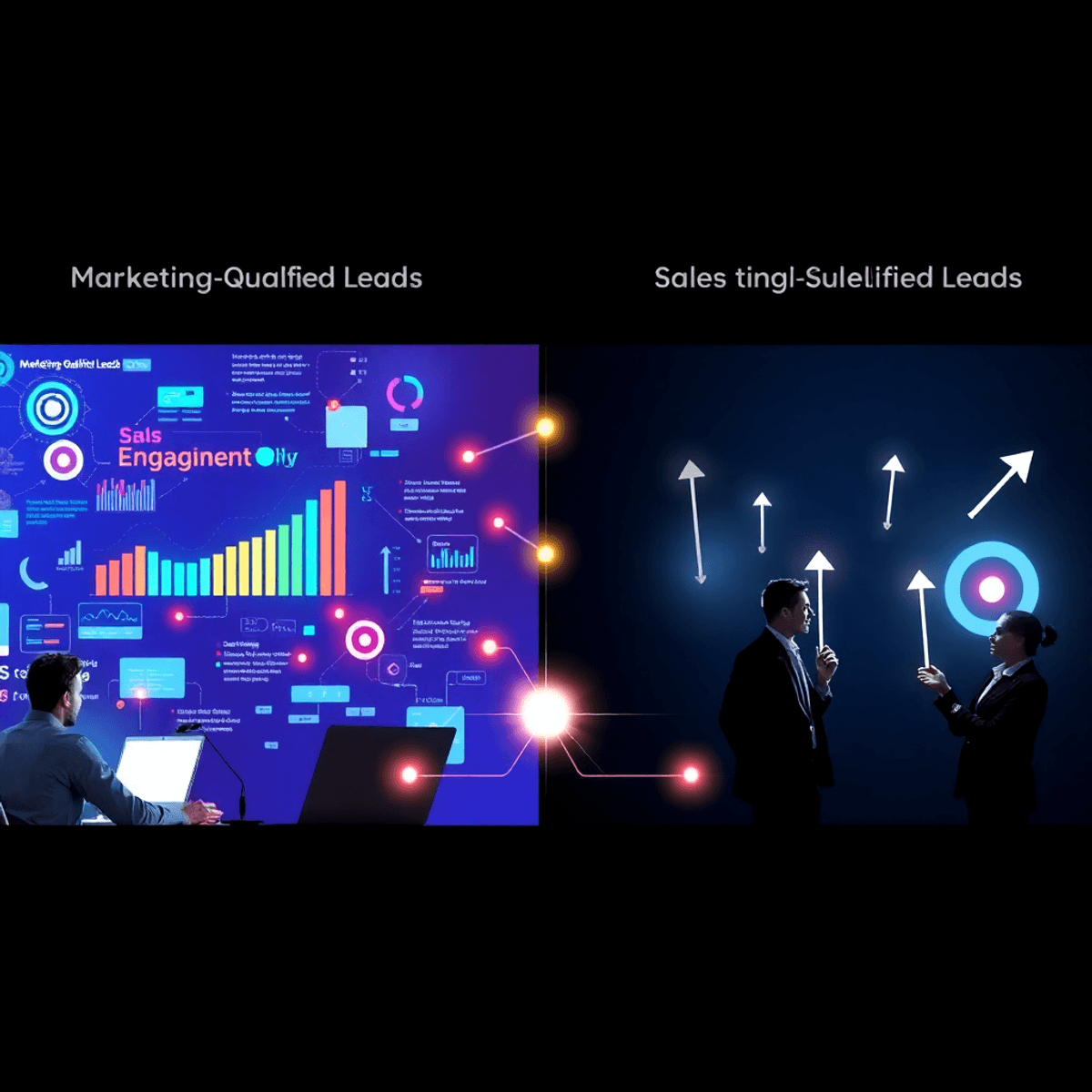
Lead qualification is crucial for a successful sales and marketing funnel. It helps you identify which prospects need immediate attention and which ones require further nurturing before they are ready to make a purchase. Without proper qualification, your sales team may waste time pursuing leads who are not interested, while potential customers who are genuinely interested may be overlooked.
Traditionally, organizations have used the distinction between Marketing-Qualified Leads (MQLs) and Sales-Qualified Leads (SQLs) to categorize prospects based on their readiness to buy. MQLs show initial interest through actions like downloading content or visiting your website. SQLs have gone beyond curiosity—they've shown genuine intent to buy and meet specific criteria that indicate they are ready to make a purchase.
Now, there's a new game-changer in lead qualification: intent data. This data captures behavioral signals across the digital landscape, revealing what prospects are researching, which competitors they're considering, and when they're actively looking to buy. With intent data, lead qualification becomes more accurate and precise, moving away from guessing and relying on data instead.
In this article, we'll explore the key differences between Sales-Qualified Leads and Marketing-Qualified Leads. We'll also demonstrate how intent data can bridge the gap between these two categories. You'll learn how to use intent signals to identify true buying intent, speed up your sales process, and significantly increase conversion rates.
Marketing-Qualified Leads (MQLs) are potential customers who have shown initial interest in your product or service by engaging with your marketing efforts. These leads are identified by your marketing team based on specific actions they take across various channels.
An MQL typically exhibits one or more of these characteristics:
Your marketing team plays a crucial role in monitoring these lead behaviors through analytics platforms, CRM systems, and marketing automation tools. They assign scores based on the frequency and quality of interactions, determining when a lead crosses the threshold from casual visitor to MQL.
The defining characteristic of MQLs is their position in the buyer's journey—they're researching and exploring solutions but haven't yet signaled readiness to make a purchase decision. You'll notice they're gathering information, comparing options, and building knowledge about their problem and potential solutions.
Lead nurturing strategies for MQLs focus on education and relationship-building. You'll typically deploy targeted email sequences that provide valuable content, retargeting campaigns that keep your brand visible, and personalized content recommendations based on their previous interactions. The goal is moving them closer to a buying decision through consistent, relevant engagement.
Sales-Qualified Leads (SQLs) are prospects who have moved further down your sales funnel. Unlike Marketing-Qualified Leads (MQLs), SQLs have been carefully evaluated by your sales team and show a real willingness to discuss making a purchase. SQLs are different from MQLs because they clearly indicate their intent to buy and meet specific criteria that suggest they are about to make a buying decision.
The main difference between SQLs and MQLs is how ready they are for sales engagement. While an MQL might show interest by downloading multiple whitepapers and attending a webinar, an SQL has taken more direct actions such as:
These actions indicate that SQLs have moved beyond just researching passively and are actively evaluating your product or service.
Your sales team plays a crucial role in determining whether a lead qualifies as an SQL. They do this by:
This personal touch from the sales team sets SQLs apart from MQLs, which are often identified using automated algorithms.
To qualify leads as SQLs, many sales teams use the BANT Framework. This framework evaluates four important factors:
By assessing these criteria, your sales team can determine whether a lead has genuine potential to convert into a paying customer.
Qualifying leads as SQLs brings several benefits:
Overall, qualifying leads as SQLs helps streamline your sales process and improves the effectiveness of your team's outreach efforts.
Intent data captures the digital footprints prospects leave across the internet—revealing what they're researching, comparing, and considering right now. This information comes from multiple sources:
The power of intent data lies in its ability to expose explicit buying intent that traditional engagement metrics miss. When someone downloads a whitepaper, you know they're interested. When that same person visits your competitors' pricing pages, reads multiple product comparison articles, and searches for implementation timelines—you're witnessing genuine purchase consideration. These online signals paint a complete picture of prospect behavior that goes far beyond surface-level interactions.
Lead scoring models transform dramatically when you integrate intent data. Instead of assigning points solely based on job title or company size, you can prioritize leads actively researching solutions in your category. A prospect showing high intent signals—even from a smaller company—often deserves immediate attention over a Fortune 500 contact who merely opened an email six months ago.
The accuracy gains are measurable. You're no longer guessing which leads deserve sales attention based on demographic fit alone. Intent data identifies prospects in active buying cycles, reducing wasted effort on leads still in early awareness stages while accelerating engagement with those ready for conversations. This precision directly impacts your ability to distinguish between Sales-Qualified Leads vs Marketing-Qualified Leads: The Intent Data Difference, creating clearer handoff criteria between teams.
Intent data changes how you differentiate between leads who are casually interested and those who are ready to make buying decisions. When a potential customer downloads a whitepaper, they qualify as an MQL (Marketing Qualified Lead)—but when that same potential customer starts looking at pricing pages, comparing your solution with competitors, and consuming content that is closer to making a decision within a short period of time, intent signals indicate they are at the SQL (Sales Qualified Lead) level.
The timing of these actions is very important. An MQL might engage with educational content occasionally over several months, while an SQL shows focused research activity within days or weeks. This concentrated pattern of engagement indicates urgency and active evaluation.
Intent data allows you to personalize your outreach based on specific research behaviors. When a lead views your integration capabilities page five times, your sales team can directly address technical requirements instead of starting with generic discovery calls. This accuracy reduces false positives—leads who seem engaged but lack genuine purchase intent—and ensures your sales resources are directed towards prospects showing real buying signals. The outcome is better qualification precision and higher conversion rates from initial contact to final deals.
Marketing Automation platforms transform intent data into actionable workflows that respond to prospect behavior in real-time. When a lead demonstrates high-intent signals—like repeatedly visiting pricing pages or downloading multiple product comparison guides—automated systems trigger personalized email sequences, schedule targeted ads, or alert sales representatives immediately. This dynamic approach replaces static, time-based nurturing with behavior-driven engagement that matches the prospect's actual buying journey.
Lead Nurturing Campaigns become significantly more effective when built around intent signals. You can segment prospects based on specific content they've consumed or features they've researched, delivering hyper-relevant resources that address their exact pain points. A prospect researching integration capabilities receives technical documentation and API guides, while someone exploring ROI calculators gets case studies demonstrating measurable business outcomes.
The shared visibility into intent data creates a unified language between marketing and sales teams. Both departments access the same behavioral insights, eliminating the traditional disconnect where marketing passes leads without context. Sales representatives enter conversations already knowing which solutions interest the prospect, which competitors they're evaluating, and what timeline indicators suggest.
Sales Pipeline Acceleration becomes measurable when you track intent-qualified leads. Companies implementing intent-driven qualification report 30-40% shorter sales cycles because representatives engage prospects at peak interest moments. The data shows these leads convert at rates 2-3 times higher than traditionally qualified leads, directly impacting revenue velocity and forecast accuracy.
The numbers tell a compelling story about Sales-Qualified Leads vs Marketing-Qualified Leads: The Intent Data Difference. When you examine the progression rates, you'll see that only 34% of MQLs advance to Sales-Accepted Leads (SAL) status. From there, nearly half of these SALs become SQLs. The most striking statistic? Over 50% of SQLs result in successful deals.
These Lead Conversion Rates improve dramatically when you integrate intent data into your qualification process. Organizations leveraging intent signals report conversion rate increases of 20-30% compared to traditional qualification methods. You're not just moving leads through the funnel faster—you're moving the right leads.
Pipeline Efficiency metrics reveal the true business impact. Companies using intent-driven qualification see their sales cycles compress by an average of 15-20%. Your sales team spends less time chasing unqualified prospects and more time closing deals with buyers who've already demonstrated purchase intent.
The revenue impact becomes clear when you calculate the cumulative effect. If you're converting 50% of your SQLs and you've increased your MQL-to-SQL progression rate by 25% through intent data, you're looking at significant pipeline growth. One B2B software company reported a 35% increase in qualified pipeline value within six months of implementing intent-based scoring.
You can measure these improvements through key performance indicators:
The Intent Data Advantage changes how you qualify leads. You've seen the numbers—the journey from MQL to SAL to SQL becomes predictable when you use behavioral signals that show real buying interest.
Your Lead Qualification Strategy needs this accuracy. Intent data connects marketing curiosity with sales-ready prospects, removing guesswork from your pipeline. You're not just scoring leads anymore; you're finding active buyers at the exact moment they're looking for solutions.
Sales-Marketing Alignment happens naturally when both teams have the same intent insights. You create a common understanding of prospect behavior, making sure marketing nurtures with relevance while sales engages with confidence.
The difference between Sales-Qualified Leads vs Marketing-Qualified Leads isn't just about definitions—it's about actionable intelligence. Intent data gives you the clarity to invest resources where they matter most, speeding up deals and maximizing revenue potential. You can't afford to qualify leads based on outdated engagement metrics when behavioral signals show who's ready to buy right now.


